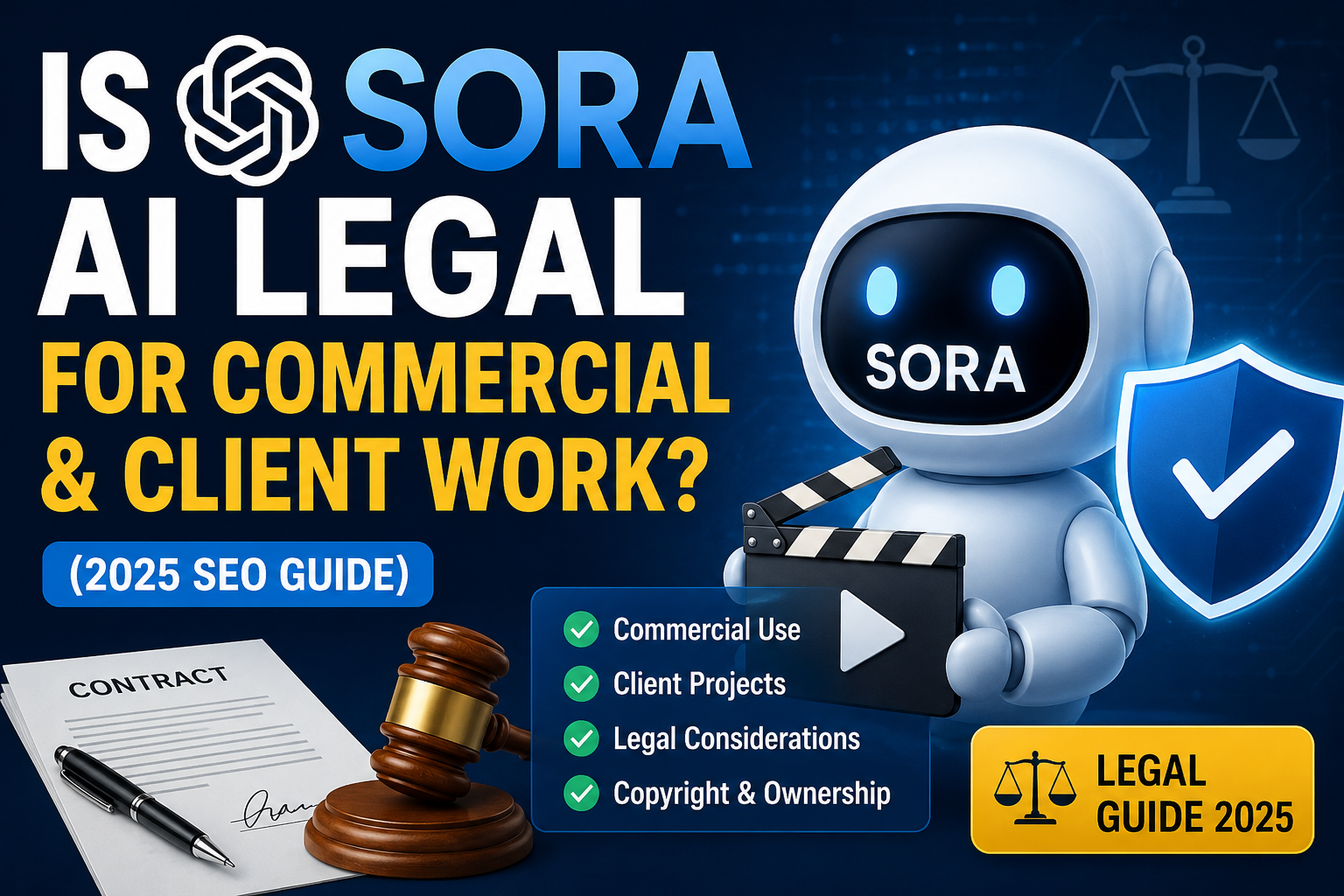
If you are a marketer, agency owner, freelancer, or content creator, you’ve probably asked this question: “Is Sora AI Legal for Commercial & Client Work?” As AI video generation tools rapidly evolve, understanding licensing, usage rights, and commercial permissions is essential before using any output in paid projects.
In this article, we’ll break down everything you need to know about using Sora for business, client work, and monetized content—based on current AI usage norms and OpenAI-style licensing frameworks.
What is Sora AI?
Sora is an advanced AI video generation model developed to create realistic and high-quality videos from text prompts. It can generate cinematic scenes, animations, and conceptual visuals that previously required professional video production teams.
Because of its power, many businesses are asking whether they can legally use Sora-generated content in:
- Commercial advertisements
- Client deliverables
- YouTube monetized content
- Social media marketing
- Agency production pipelines
Is Sora AI Legal for Commercial Use?
Short Answer: Yes—But with conditions
The keyword question “Is Sora AI legal for commercial & client work?” has a nuanced answer:
👉 In general, AI-generated content from OpenAI tools is typically allowed for commercial use if you comply with the platform’s terms of service, usage policies, and content guidelines.
However, legality depends on:
- The official licensing terms at the time of use
- Whether the output violates copyright or third-party rights
- How the generated content is used in real-world projects
- Regional laws regarding AI-generated media
So, while Sora AI content is designed for broad usability, it is not “free-for-all” usage.
Commercial Use Rights Explained
If OpenAI follows its standard model (similar to other tools like ChatGPT and DALL·E), commercial usage usually includes:
Allowed Uses:
- Marketing videos for brands
- Client advertising campaigns
- Monetized YouTube content
- Website and social media content
- Freelance and agency production work
Restricted Uses (Typical AI Policy Limits):
- Creating misleading deepfakes of real people
- Generating copyrighted characters without rights
- Producing harmful, illegal, or deceptive content
- Using content in violation of third-party intellectual property
Can Agencies Use Sora AI for Client Work?
Yes—agencies can use Sora AI for client projects, but they must ensure:
1. Proper Licensing Compliance
You must verify that the generated content is permitted for commercial redistribution under OpenAI’s terms.
2. Client Transparency
Many agencies disclose AI use in workflows, especially for:
- Video ads
- Conceptual storytelling
- Pre-visualization content
3. Copyright Safety
Even if AI generates content, agencies must avoid:
- Trademarked characters
- Recognizable celebrity likenesses
- Protected brand assets
Legal Risks You Should Be Aware Of
Even if Sora allows commercial use, risks still exist:
1. Copyright Ambiguity
AI models are trained on large datasets, and although outputs are original, disputes may arise if content resembles existing copyrighted material.
2. Client Liability
If you sell AI-generated videos, clients may still be responsible for how they use them.
3. Platform Policy Changes
AI companies may update their commercial policies over time, affecting previously allowed uses.
Best Practices for Safe Commercial Use
To safely use Sora AI in business and client projects, follow these guidelines:
✔ Always Check Updated Terms
Before using any AI output commercially, review the latest OpenAI usage policy.
✔ Avoid Sensitive Content
Do not generate:
- Real people without consent
- Political misinformation
- Copyrighted fictional universes
✔ Edit AI Output
Add human creativity, editing, and post-production to improve originality.
✔ Keep Documentation
Maintain records of:
- Prompt usage
- Project scope
- Client agreements
SEO Insight: Why Businesses Care About Sora AI Legality
Search interest in “Is Sora AI legal for commercial & client work” is growing because:
- AI is replacing traditional video agencies
- Businesses want lower production costs
- Freelancers are scaling with AI tools
- Content creation speed is becoming critical
This makes legal clarity essential for agencies, startups, and digital marketers.
Future of AI Video Licensing
As tools like Sora evolve, we can expect:
- Clearer commercial licensing tiers
- Built-in copyright detection systems
- Enterprise usage agreements for agencies
- More standardized AI media laws globally
In the near future, AI video tools will likely become as legally structured as stock footage platforms.
FAQ: Is Sora AI Legal for Commercial & Client Work?
1. Can I sell videos made with Sora AI?
Yes, if OpenAI’s terms allow commercial usage at the time and the content doesn’t violate copyright laws.
2. Do I need a license for client work?
Usually, the platform’s terms act as the license. However, enterprise plans may include additional rights.
3. Is Sora AI content copyright-free?
AI-generated content is typically usable, but legal ownership and copyright status may vary by jurisdiction.
4. Can agencies fully replace video production teams?
AI can reduce production costs, but creative direction, editing, and strategy still require human expertise.
Conclusion
So, is Sora AI legal for commercial & client work?
👉 The answer is generally yes—but only when used within OpenAI’s usage policies and intellectual property laws.
Sora offers powerful opportunities for marketers, agencies, and creators, but responsible use is essential to avoid legal risks.
If you follow compliance rules, avoid copyrighted material, and apply human oversight, Sora AI can become a game-changing tool for modern commercial video production.